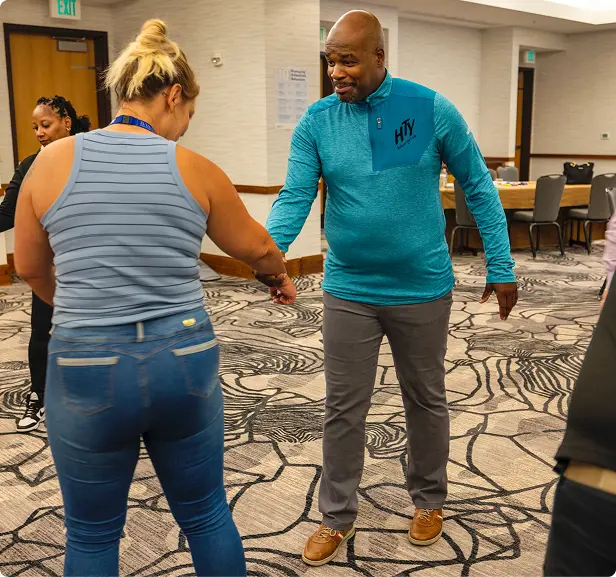
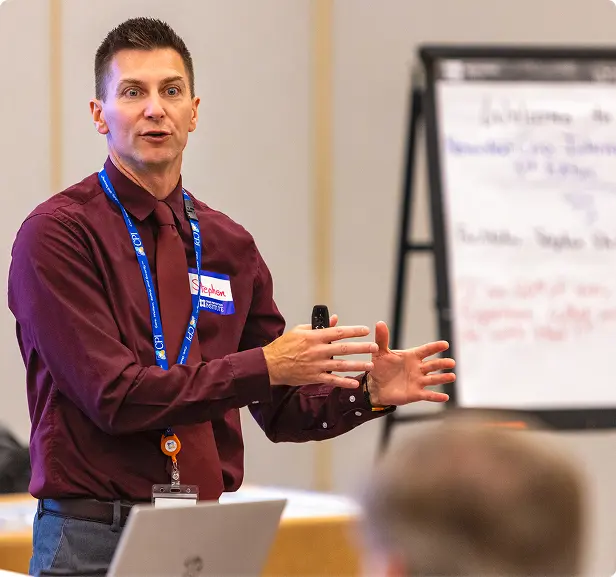
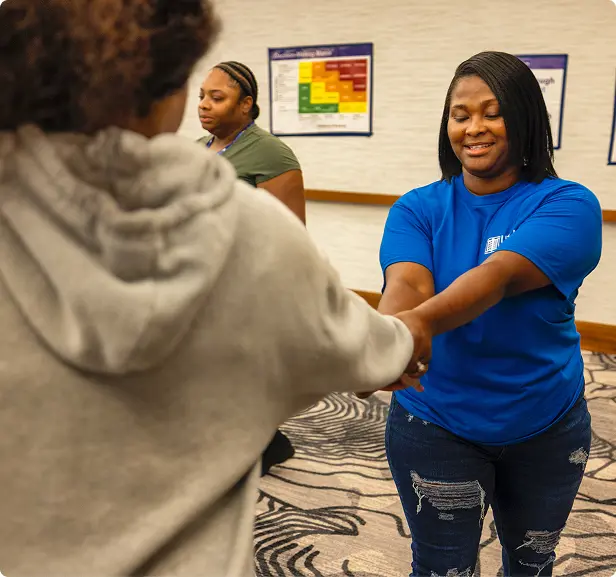
We certify your trainers
CPI Instructors train select staff to become your organization’s Certified Instructors.

Nonviolent Crisis Intervention® With Intermediate Physical Skills
This new program is designed for organizations that require safety intervention techniques without using supine and prone holds. Empower your staff with skills and confidence they need to handle real-world situations.

Nonviolent Crisis Intervention® (NCI) With Intermediate Physical Skills prepares your staff with the skills and confidence to safely use physical interventions as a last resort, with a focus on four specific safety interventions, including "Team Control."
Our certification program is tailored for staff who require safety intervention techniques, but who are prohibited from using supine or prone holds. Our training is compliant with state legislation and shows your staff how to safely use physical interventions as a last resort.
Add Specialty Topics
CPI offers specialty topic programs that deepen a trainee's understanding of challenging behavior displayed by unique populations of individuals. These are supplemental to the material presented in our core Nonviolent Crisis Intervention With Intermediate Physical Skills program.
Our train-the-trainer framework increases fidelity and adoption and ensures the most relevant training is delivered based on roles and risk levels.
CPI Instructors train select staff to become your organization’s Certified Instructors.
Certified Instructors conduct ongoing trainings using CPI courses and materials.
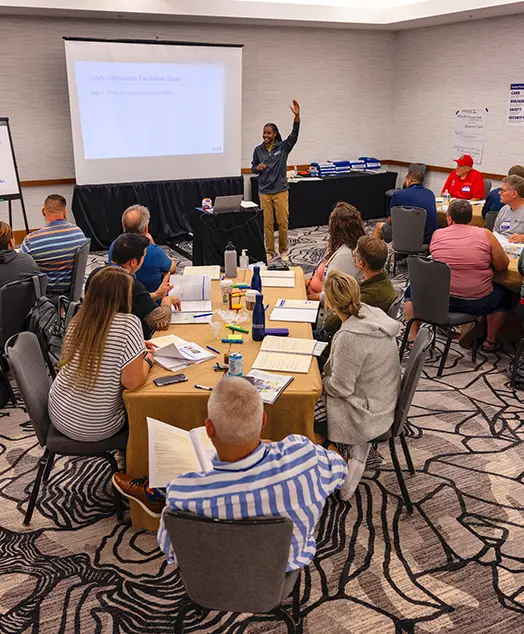
Trained staff gain practical expertise and vocabulary to safely address challenging situations.

More to Explore
Our industry-leading programs provide the skills to recognize, prevent, and respond to crises. Our in-depth training solutions ensure the right staff receive the right level of training.
Provides the skills to safety disengage and intervene in crisis situations
Designed for organizations who need access to physical skills, but are prohibited from using supine or prone holds
Teaches safe and advanced disengagement skills for higher-risk roles
To become CPI certified, you need to attend training conducted by CPI Global Professional Instructors who will train select staff from your organization to become Certified Instructors. This certification process applies to CPI's core training programs, including CPI Verbal Intervention™ Training, Nonviolent Crisis Intervention®, Nonviolent Crisis Intervention® with Intermediate Physical Skills, and Nonviolent Crisis Intervention® With Advanced Physical Skills.
Once certified, you must attend renewal training every two years to maintain your certification. The renewal process ensures you stay current with the most updated de-escalation techniques while sharpening your confidence and skills through refreshed scenarios and networking opportunities with peers.
To begin the certification process or renew an existing certification, you can start at https://www.crisisprevention.com/event-registration.
CPI offers training for schools and teachers through our Nonviolent Crisis Intervention® program. This evidence-based training equips educators with proactive de-escalation strategies to create safer, more positive learning environments.
Our approach involves training select teachers to become Certified Instructors for your school. These Certified Instructors then conduct ongoing trainings with their colleagues using CPI courses and materials. This train-the-trainer model ensures sustainable implementation and skill reinforcement throughout your educational organization.
The training provides teachers with essential tools for safe de-escalation, helping to decrease office referrals while increasing staff morale. School districts that have implemented CPI training report significant improvements including:
Our world-renowned Global Professional Instructors deliver engaging, interactive training sessions that prepare educators to begin each school year with effective strategies for managing challenging behaviors.
CPI also offers additional training options such as Reframing Behavior™, De-escalation Basics™, and De-escalation Basics™ for Bus Drivers to support a schoolwide culture of safety.